

Bathroom Deep Cleaning: The Step-by-Step Guide to a Truly Spotless Bathroom
The bathroom sees more microbial activity per square foot than almost any other room in your home. Steam, splashing water, and daily skin contact create ideal conditions for soap scum, mildew, mineral deposits, and bacteria — most of which regular quick cleans never fully address.
A proper bathroom deep clean reaches every surface, clears every drain, and leaves the room genuinely sanitary rather than just visually clean. This step-by-step guide walks through a complete bathroom deep clean you can accomplish in two to three hours.
Why Regular Cleaning Isn't Enough
Daily and weekly bathroom cleaning handles visible dirt and basic hygiene, but it misses the buildup that accumulates over weeks and months:
Grout darkening. Porous grout absorbs soap residue, mold spores, and mineral deposits. Wiping the tile surface doesn't touch grout channels, which gradually turn from white or gray to dark brown or black. Drain buildup. Hair, soap scum, and biofilm accumulate in drain traps and stoppers, producing slow drains, foul odors, and occasionally blocked pipes. Showerhead mineral deposits. Hard water leaves calcium and lime scale inside showerhead nozzles, reducing water pressure and spray coverage over time. Under-toilet and behind-toilet accumulation. The base of the toilet and the floor area behind it are easy to miss during routine cleaning and accumulate dust, hair, and bacteria. Exhaust fan dust. A clogged exhaust fan can't remove steam effectively, contributing to mold growth throughout the bathroom.Supplies You'll Need
Gather everything before starting:
- Bathroom disinfectant spray or diluted bleach solution (1 tablespoon bleach per quart of water)
- Grout cleaner or baking soda paste
- Toilet bowl cleaner
- Glass/mirror cleaner
- Microfiber cloths (several)
- Old toothbrush for grout and crevices
- Grout brush or stiff scrub brush
- Drain cleaning tool (hair clog remover)
- White vinegar in a zip-lock bag (for showerhead)
- Rubber gloves
- Bucket
The Deep Clean Sequence
Work from top to bottom and wet-to-dry. Apply cleaners first, let them dwell, then wipe.
1. Start at the Ceiling: Fan and Vent
Remove the exhaust fan cover and wash it in warm soapy water. Use a vacuum with a brush attachment to clean dust from the fan blades and motor housing. A clogged fan is the leading cause of persistent bathroom mold — cleaning it dramatically improves ventilation.
Wipe down walls and ceiling corners where mold and dust tend to accumulate, especially near the shower.
2. The Mirror and Medicine Cabinet
Spray glass cleaner on the mirror and wipe with a clean microfiber cloth using an S-pattern to avoid streaking. Clean the medicine cabinet shelves. Check expiration dates on products and discard anything expired or unused.
Wipe down light fixtures with a barely damp cloth — don't spray liquid near electrical fixtures.
3. Shower and Tub
Apply your chosen cleaner to all shower surfaces and let it dwell for five to ten minutes while you work elsewhere.
Showerhead descaling: Fill a zip-lock bag with white vinegar and rubber-band it over the showerhead, fully submerging the nozzle face. Leave for at least thirty minutes (several hours for heavy buildup). The acetic acid dissolves mineral deposits without chemicals. Grout scrubbing: Make a paste of baking soda and water and apply it to grout lines. Scrub with an old toothbrush or grout brush using small circular motions. For persistent dark staining, apply a small amount of diluted bleach and let it sit for five minutes before scrubbing. Shower doors or curtain: For glass doors, a squeegee removes most soap scum after applying cleaner. For stubborn mineral deposits, white vinegar or a commercial lime scale remover works well. Shower curtains can often go into the washing machine on a gentle cycle with a cup of white vinegar. Drain: Use a hair clog removal tool to pull out accumulated hair and debris from the drain. Follow with a cup of baking soda, then a cup of white vinegar, let it foam for ten minutes, then flush with hot water.4. Toilet
Apply toilet bowl cleaner inside the bowl and let it dwell while you clean the exterior. Wipe down the tank lid, tank sides, and handle with disinfectant. Clean the outside of the bowl, then the seat (both sides), seat hinges (a crevice where bacteria accumulate), and lid. Work from top to bottom, cleaning the base last.
Scrub the bowl with a toilet brush, focusing on under the rim where mineral deposits and bacteria build up.
5. Sink and Countertop
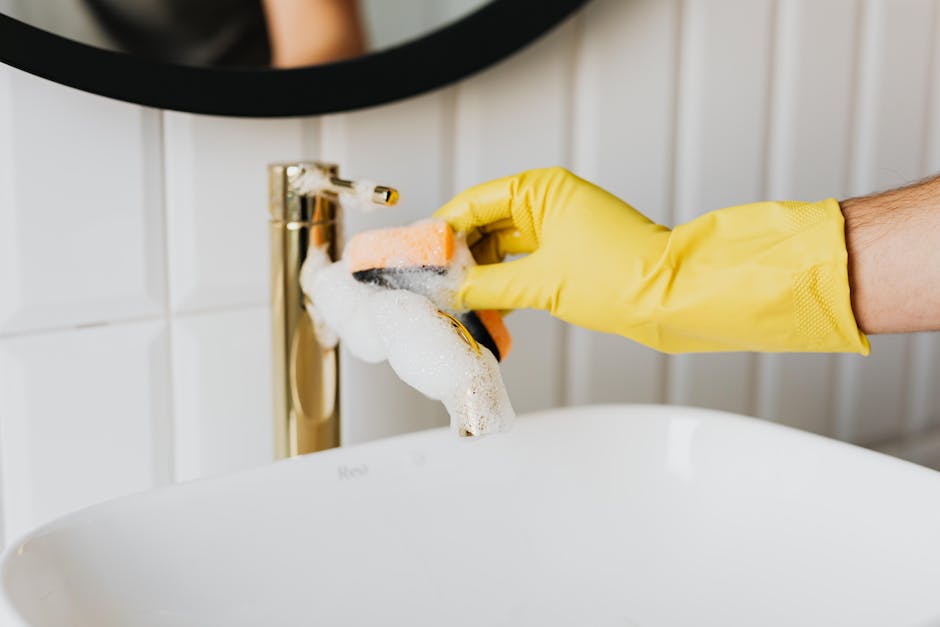
Spray the sink basin, faucet, and handles with disinfectant. Let it dwell, then scrub the drain stopper and surrounding area. Use an old toothbrush around the faucet base where grime accumulates. Rinse thoroughly.
For mineral deposits around the faucet, a cloth soaked in white vinegar wrapped around the fixture for thirty minutes dissolves buildup effectively.
Wipe down the countertop and any surface items. Clean soap dispensers and toothbrush holders — both accumulate significant bacteria.
6. Floors
Sweep or vacuum first to remove hair and debris. Mop with a disinfectant cleaner, paying attention to the areas around and behind the toilet. For tile floors, scrub grout lines with a grout brush if needed.
Move the toilet brush holder and any floor items, clean underneath, and replace them.
Maintaining Results Between Deep Cleans
A few habits extend the time between full deep cleans significantly:
Squeegee after every shower. Taking thirty seconds to squeegee tile and glass dramatically reduces soap scum and mineral deposit buildup. Weekly disinfectant wipe-down. A quick pass over the toilet, sink, and countertop with a disinfectant wipe takes five minutes and prevents bacteria buildup. Monthly drain maintenance. Pouring a cup of baking soda followed by a cup of vinegar down the drain monthly prevents most clogs. Run the exhaust fan. Keep it running during and for twenty minutes after every shower to reduce humidity and mold risk.A deep clean every six to eight weeks, supported by these maintenance habits, keeps the bathroom genuinely clean rather than just superficially tidy.
Ready to upgrade your bathroom cleaning supplies? Browse our full range of bathroom cleaning products — from grout brushes to disinfectant sprays — designed for thorough, efficient deep cleaning results.