

The Science Behind Common Kitchen Stains and How to Remove Each One
Quick Summary: Learn everything you need to know about home cleaning. This guide covers the most effective methods, top tips, and practical steps you can use right away.
Kitchen stains are more than just eyesores. Each type of stain has a unique chemical makeup, and understanding that chemistry is the key to removing it effectively. If you have ever scrubbed a turmeric stain only to watch it spread, or tried to wipe away grease with plain water and failed, you already know that a one-size-fits-all approach simply does not work.
In this guide, we break down the science behind the five most common kitchen stains and give you targeted, practical methods to eliminate each one for good.
Why Understanding Stain Chemistry Matters
Every stain falls into one of a few categories based on its molecular structure. Some are oil-based, some are pigment-based, and others are mineral deposits. The reason a particular cleaning method works on one stain but not another comes down to basic chemistry: like dissolves like, acids neutralize bases, and oxidizers break down organic pigments.
When you match the right cleaning agent to the right stain type, you work with chemistry instead of against it. That means less scrubbing, less damage to your surfaces, and far better results.
Grease Stains: Breaking Down the Oil
Why Grease Is So Stubborn
Grease is a lipid, which means it is hydrophobic. Water molecules cannot penetrate or dissolve it on their own. That is why running water over a greasy stovetop barely makes a difference.
How to Remove Grease Stains
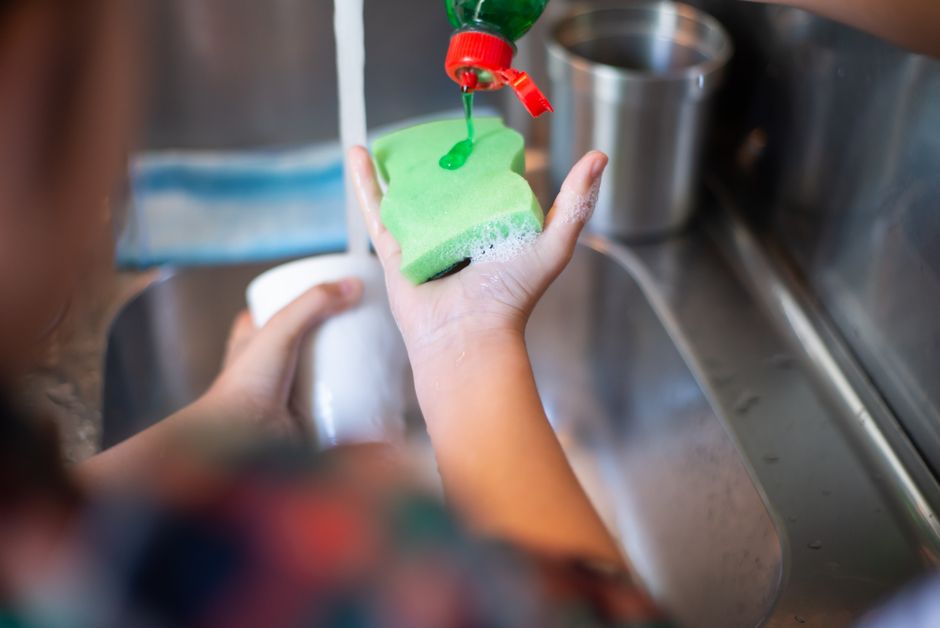
The solution lies in surfactants, which are molecules found in dish soap and degreasers. Surfactants have a water-loving head and an oil-loving tail. They surround grease molecules, lift them off the surface, and suspend them in water so you can rinse them away.
- Fresh grease: Apply a small amount of dish soap directly to the stain. Let it sit for two to three minutes, then wipe with a warm, damp cloth.
- Baked-on grease: Make a paste with baking soda and water. Spread it over the stain and let it sit for 15 to 20 minutes. The mild abrasiveness of baking soda helps loosen hardened grease without scratching most surfaces.
- Grease on fabric: Sprinkle cornstarch or talcum powder on the stain to absorb excess oil before washing.
Pro Tip
Always use warm or hot water when tackling grease. Heat lowers the viscosity of oil, making it easier for surfactants to do their job.

Coffee Stains: Tackling Tannin Pigments
Why Coffee Stains So Quickly
Coffee contains tannins, a group of polyphenolic compounds that bond readily with surfaces. The moment coffee hits your countertop, mug, or grout, those tannins begin forming hydrogen bonds with the material underneath.
How to Remove Coffee Stains
Because tannins are organic pigments, oxidizing agents are your best friend. Hydrogen peroxide, oxygen-based bleach, and even white vinegar can break the bonds that hold tannin molecules in place.
- On countertops: Mix equal parts baking soda and hydrogen peroxide into a paste. Apply to the stain, cover with plastic wrap, and wait 30 minutes. Wipe clean.
- On mugs and cups: Fill the stained mug with a mixture of one tablespoon of baking soda and warm water. Let it soak for an hour, then scrub gently.
- On grout: Apply a paste of baking soda and water, then spray with white vinegar. The fizzing action helps lift the tannin deposits from porous surfaces.
Wine Stains: The Red Pigment Problem
Why Red Wine Stains Are So Intense
Red wine gets its color from anthocyanins, which are powerful plant pigments. These pigments are water-soluble initially, but once they dry, they oxidize and become much harder to remove. The acidity of wine also helps the pigment penetrate surfaces quickly.
How to Remove Wine Stains
Speed is critical with wine stains. The faster you act, the easier the removal.
- On fabric or tablecloths: Blot the stain immediately. Never rub. Apply salt generously to absorb the liquid, then rinse with cold water. Follow up with an oxygen-based stain remover before washing.
- On countertops: Wipe immediately with a damp cloth. If a stain remains, apply a paste of baking soda and a few drops of hydrogen peroxide. Let it sit for five to ten minutes.
- On wooden cutting boards: Sprinkle coarse salt on the stain and rub with half a lemon. The salt provides abrasion while the citric acid works on the pigment.
Important Note
Avoid using hot water on fresh wine stains. Heat can set anthocyanin pigments, making them permanent.
Turmeric Stains: The Curcumin Challenge
Why Turmeric Stains Everything It Touches
Turmeric contains curcumin, a vibrant yellow compound that is both fat-soluble and a potent dye. Curcumin molecules bind strongly to plastic, fabric, and porous surfaces. It is one of the most persistent kitchen stains you will encounter.
How to Remove Turmeric Stains
Here is the good news: curcumin is photosensitive. Ultraviolet light breaks down its molecular structure. But since you cannot always leave your countertop in the sun, here are practical alternatives.
- On plastic containers: Make a paste of baking soda and dish soap. Apply it to the stain and let it sit for 15 minutes. Then place the container in direct sunlight for a few hours if possible.
- On countertops: Apply a solution of one part white vinegar to two parts water. Wipe, then follow up with a baking soda paste if the stain persists.
- On fabric: Apply rubbing alcohol or hand sanitizer to the stain before washing. Alcohol helps dissolve the fat-soluble curcumin.
- On cutting boards: Rub vegetable oil over the stain, let it sit for a few minutes, then wash with dish soap. This works because curcumin dissolves more readily in oil than in water.
Prevention Tip
Consider using glass containers instead of plastic for turmeric-heavy dishes. Glass is non-porous and resists staining far better.
Hard Water Stains: Mineral Deposit Buildup
Why Hard Water Leaves White Marks
Hard water contains dissolved minerals, primarily calcium carbonate and magnesium. When water evaporates from your faucet, sink, or glass surfaces, these minerals are left behind as a chalky white residue. Over time, the deposits build up and become increasingly difficult to remove.
How to Remove Hard Water Stains
Since hard water stains are alkaline mineral deposits, acidic solutions are the answer. Acids dissolve the calcium and magnesium compounds, breaking them down into water-soluble salts that rinse away easily.
- On faucets and fixtures: Soak a cloth in undiluted white vinegar and wrap it around the affected area. Leave it for one to two hours, then scrub gently with an old toothbrush.
- On glass and shower doors: Spray with a 50/50 mixture of white vinegar and water. Let it sit for 15 minutes, then wipe with a microfiber cloth.
- On stainless steel sinks: Apply lemon juice directly to the deposits. The citric acid works similarly to vinegar but leaves a fresh scent.
- Severe buildup: For heavy deposits, use a descaling solution with a higher acid concentration. Apply, wait, and repeat if necessary.
Prevention Strategy
Wiping surfaces dry after each use is the simplest way to prevent hard water stains from forming in the first place.
Quick Reference Chart
| Stain Type | Key Compound | Best Cleaning Agent | Avoid |
|---|---|---|---|
| Grease | Lipids | Dish soap, baking soda | Cold water alone |
| Coffee | Tannins | Hydrogen peroxide, baking soda | Leaving it to dry |
| Red Wine | Anthocyanins | Salt, oxygen bleach | Hot water |
| Turmeric | Curcumin | Vinegar, rubbing alcohol | Scrubbing dry |
| Hard Water | Calcium/Magnesium | White vinegar, lemon juice | Abrasive scrubbers on glass |
Putting It All Together
The next time you face a stubborn kitchen stain, resist the urge to grab the nearest cloth and scrub. Instead, take a moment to identify what caused the stain, choose the right cleaning approach, and let chemistry do the heavy lifting.
With the right tools and a little patience, virtually every kitchen stain is reversible. Your countertops, appliances, and cookware will thank you.
Related Reading
🛒 Ready to shop? Browse our Eco-Friendly Cleaning Products — curated products to make your cleaning routine easier and more effective.