

Kitchen Deep Cleaning: The Complete Guide to a Genuinely Clean Kitchen
The kitchen is the hardest-working room in most homes and the one most vulnerable to invisible buildup. Cooking aerosolizes oil that coats surfaces far from the stove. Food particles end up in places you'd never think to look. Humidity under sinks and behind appliances creates conditions for mold and bacteria that daily cleaning never touches.
A kitchen that looks clean after a routine wipe-down often isn't. A proper deep clean — the kind that reaches every surface and hidden space — transforms both how the kitchen looks and how it feels to cook in. This guide walks through a complete deep clean you can do over a weekend.

Why Kitchen Deep Cleaning Is Different
Every kitchen accumulates four specific problems that regular cleaning doesn't address:
Grease fog. Cooking releases oil as vapor that drifts throughout the space, cooling and adhering to every surface within range of the stove. Over months it forms a sticky film that attracts dust and darkens surfaces imperceptibly. Hidden food debris. Particles fall into gaps, slide behind appliances, and collect in drawer tracks. This feeds insects, grows mold, and produces odors you can't locate. Coil and fan dust. Refrigerator condenser coils, range hood filters, and exhaust fans accumulate dust that reduces efficiency, causes appliance failures, and circulates contaminated air. Plumbing and drain buildup. Grease, food, and biofilm accumulate in disposals, drain traps, and dishwasher filters, producing smells and eventually clogs.None of this is visible during routine cleaning. All of it requires a scheduled deep clean to address.
Before You Start: Setup and Supplies
Gather everything before you begin. Stopping mid-clean to search for supplies is why most deep cleans get abandoned half-finished.
Supplies:- Degreaser (commercial or homemade — 1 part white vinegar to 1 part water)
- Baking soda
- Dish soap
- Microfiber cloths (6+ clean ones)
- Old toothbrush for crevices
- Magic erasers
- Rubber gloves
- Large bucket
- Vacuum with crevice attachment
- Step stool for high cabinets
- Trash bags
The Deep Clean Sequence
Work top-to-bottom, back-to-front. Each section below builds on the previous.
1. Ceiling, Lights, and Walls
The forgotten surfaces in most cleaning. Grease fog accumulates here first.
- Dust ceiling fan blades (both sides) and light fixtures
- Wash the ceiling in cooking areas — yes, really. A mop on a long handle with degreaser solution reveals how yellow it's become.
- Remove and wash light globes in warm soapy water
- Wipe walls with degreaser, especially behind the stove and above the backsplash. Dark walls may need magic eraser for tough spots.
- Check vent covers and exhaust fans — remove, wash in soapy water, air dry
2. Upper Cabinets — Outside and Top
- Vacuum the tops of cabinets — usually an inch of dust and grease
- Wash cabinet tops with degreaser — takes several passes for neglected tops
- Wipe cabinet exteriors, paying attention to handles, areas near the stove, and around door edges where hands touch
3. Upper Cabinets — Inside
Empty one cabinet at a time (don't pull everything out simultaneously — it becomes overwhelming).
- Vacuum crumbs and debris
- Wipe shelves with damp microfiber
- Replace shelf liners if worn
- Clean contents before replacing — check expiration dates, wipe sticky bottles, discard unused items
- Organize contents logically before putting everything back
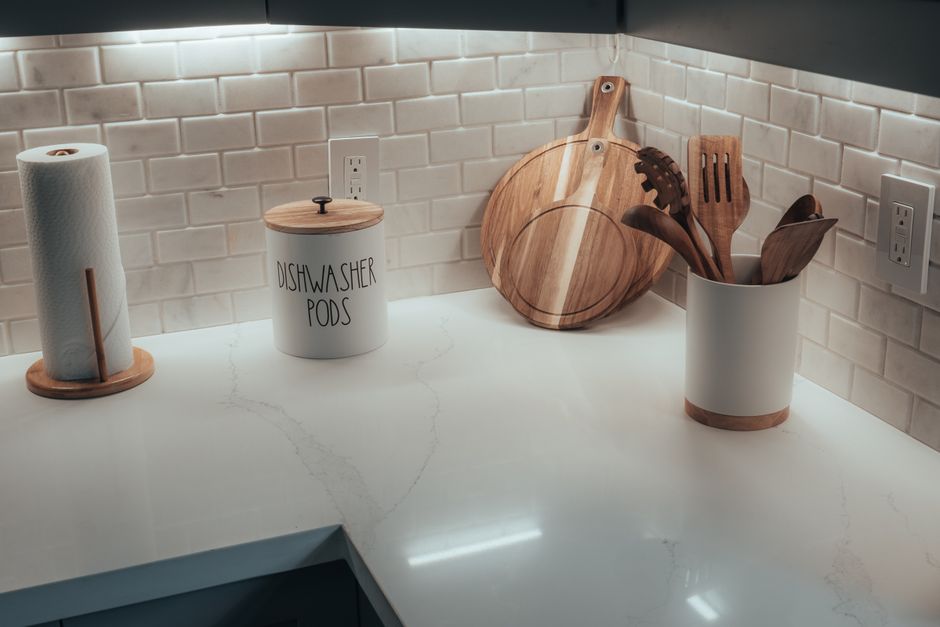
4. Countertops and Backsplash
- Clear countertops completely
- Clean the backsplash thoroughly — especially grout lines, which collect grease and darken over time
- Treat stains with appropriate cleaner (stone gets stone cleaner; tile tolerates more)
- Seal stone countertops if they haven't been sealed in 1–2 years
- Clean under small appliances — coffee makers, toasters, microwaves often hide months of crumbs
5. Range Hood and Stovetop
The single greasiest zone. Allow significant time.
Range hood:- Remove metal filters (aluminum or stainless steel mesh)
- Soak filters in very hot water with degreaser and baking soda for 30 minutes
- Scrub with a brush; rinse thoroughly
- Wipe hood exterior and interior with degreaser
- If filters are charcoal (non-washable), replace them — they're consumables
- Remove burner grates, drip pans, and burner caps (gas stoves)
- Soak in hot soapy water for 30 minutes
- Scrub with a nylon brush — steel wool scratches many finishes
- Clean stovetop surface with appropriate cleaner (glass top vs. stainless vs. porcelain)
- Clean around knobs and in gaps where food falls
6. Oven
The single most dreaded kitchen task. Methods:
Self-cleaning cycle — works but uses significant energy and produces smoke. Run with windows open. Baking soda paste method — mix baking soda with water to form paste. Coat oven interior (avoiding heating elements). Leave overnight. Wipe clean in morning; spray vinegar to neutralize remaining paste. Commercial oven cleaner — fastest and strongest. Ventilate well; wear gloves and eye protection. Follow directions exactly.Don't forget:
- Oven door glass (inside and between panes if accessible)
- Oven racks — soak in bathtub or large sink with hot water and dish soap; scrub with nylon brush
- Burner beneath the oven floor — crumbs accumulate here
- Oven gasket — wipe with damp cloth (never harsh cleaners; gasket can degrade)
7. Refrigerator
A complete deep clean, inside and out.
Interior:- Empty everything — put perishables in a cooler
- Remove all shelves and drawers
- Wash shelves in sink with warm soapy water
- Wipe interior with baking soda solution (not soap — some brands leave residue that affects food taste)
- Check the drain hole at the back — clear it with a pipe cleaner or cotton swab
- Before replacing food, wipe each bottle and jar bottom
- Wipe the top (often neglected and dust-laden)
- Clean handles with special attention — they're the dirtiest high-touch surface in most kitchens
- Clean the gasket (rubber seal) with soapy water and a toothbrush; apply food-grade mineral oil to restore flexibility if cracked
- Unplug the refrigerator
- Pull it away from the wall
- Vacuum the coils at the back or underneath (check your model)
- Clean the floor and wall behind — often significant dust buildup
- Do this every 6–12 months — reduces energy use and extends compressor life
8. Dishwasher
- Clean the filter at the bottom — remove, rinse, scrub with toothbrush
- Wipe the gasket seal around the door with damp cloth
- Run an empty cycle with a cup of white vinegar on the top rack (hottest setting)
- Clean spray arms — check for clogged spray holes; clear with toothpick if needed
- Wipe the exterior, especially handles
9. Sink and Disposal
- Scrub the sink with baking soda and a non-scratch sponge
- Disinfect with diluted bleach (stainless and enamel) or appropriate cleaner for stone
- Clean the drain — pour boiling water down, then baking soda, then vinegar
- Clean the disposal — grind ice cubes with rock salt, then citrus peels
- Wipe the faucet and handles thoroughly — use toothbrush for base and crevices
- Polish fixtures with appropriate polish
10. Lower Cabinets and Drawers
- Empty one drawer/cabinet at a time
- Vacuum crumbs and debris
- Wipe interiors with damp cloth
- Clean drawer tracks — this is where food particles accumulate most
- Replace organizers and liners as needed
- Clean exterior of lower cabinets, especially around handles
11. Floor
The final step — everything else drops debris onto it.
- Sweep or vacuum thoroughly — including under toe kicks of cabinets
- Use a crevice tool to reach between appliances and cabinets
- Mop with appropriate floor cleaner for your flooring type
- Pay attention to baseboards — dusty and often stained at floor level
- Clean under the stove and refrigerator if you haven't yet during appliance cleaning
12. Final Touches
- Clean light switches and outlets with disinfecting wipe
- Wipe door knobs and door frames near the kitchen
- Replace dish towels, sponges, and scrub brushes with fresh ones
- Take out the trash
- Open windows briefly to air out cleaning-product smells
Maintenance After Deep Cleaning
The deep clean only lasts as long as daily habits preserve it.
Daily:- Wipe counters after cooking
- Wipe the stovetop while still warm
- Do dishes or load dishwasher before bed
- Sweep high-traffic zones
- Thorough counter wipe with cleaner
- Sweep and mop floors
- Clean the microwave interior
- Wipe appliance exteriors
- Empty and clean the sink strainer
- Wipe cabinet fronts
- Clean the range hood exterior and metal filter
- Run dishwasher cleaning cycle
- Disinfect cutting boards
- Deep clean one cabinet or drawer
When to Schedule Your Next Deep Clean
- Every 3–6 months for most households
- Every 2–3 months if you cook daily or have multiple cooks
- Every month or on-demand for heavy cooking households or post-dinner-party catch-up
Mark it on the calendar. Kitchens that don't get scheduled deep cleans get overwhelming surprise cleans.
Final Thoughts
A genuinely clean kitchen is one of the highest-impact outcomes in a home. Food prep feels better. Cooking is more pleasant. The whole space smells different. Health risks (cross-contamination, allergens, pest attractants) drop significantly.
The first deep clean in a while takes hours. The second one, months later, takes less. By the third, you've established a rhythm and most zones stay cleaner between full cleans. Start at the top, work down, and don't skip the hidden zones — they're where the real accumulation lives.